
How WaveCraft turns resin, glass and engineering drawings into a vessel that survives twenty seasons in the Indian Ocean.
Each hull starts with a polished mould and an isophthalic gelcoat, followed by a vinylester skin coat that resists osmosis in warm tropical water. Chopped strand and biaxial glass are then laid up to a written schedule, with resin weighed rather than estimated.
Longitudinal stringers and transverse frames are bonded in and over-laminated, spreading engine and slamming loads across the hull instead of concentrating them at the transom.
Hull lines, weight distribution and propeller matching are modelled before tooling. We size engines for the operator's real load, not the brochure figure.
Marine-grade resins, E-glass reinforcement, 316 stainless fittings and closed-cell foam coring where weight matters more than cost.
Hardness tests on cured laminate, dry-fit checks on every system and a documented file that follows the vessel from mould to handover.
Mould preparation, lamination, hull turn-out, structural bonding, deck joining, fit-out, painting, commissioning, sea trial, delivery.
Route, payload and sea conditions translated into hull lines and a laminate schedule.
Moulds polished, waxed and released; gelcoat thickness measured wet.
Skin coat and structural laminate applied and rolled out layer by layer.
Stringers, bulkheads and engine beds bonded and over-laminated.
Hull and deck bonded and mechanically fastened along the sheer.
Fuel, steering, electrical and plumbing installed, pressure-tested and labelled.
Joinery, upholstery, glazing and hardware installed by in-house trades.
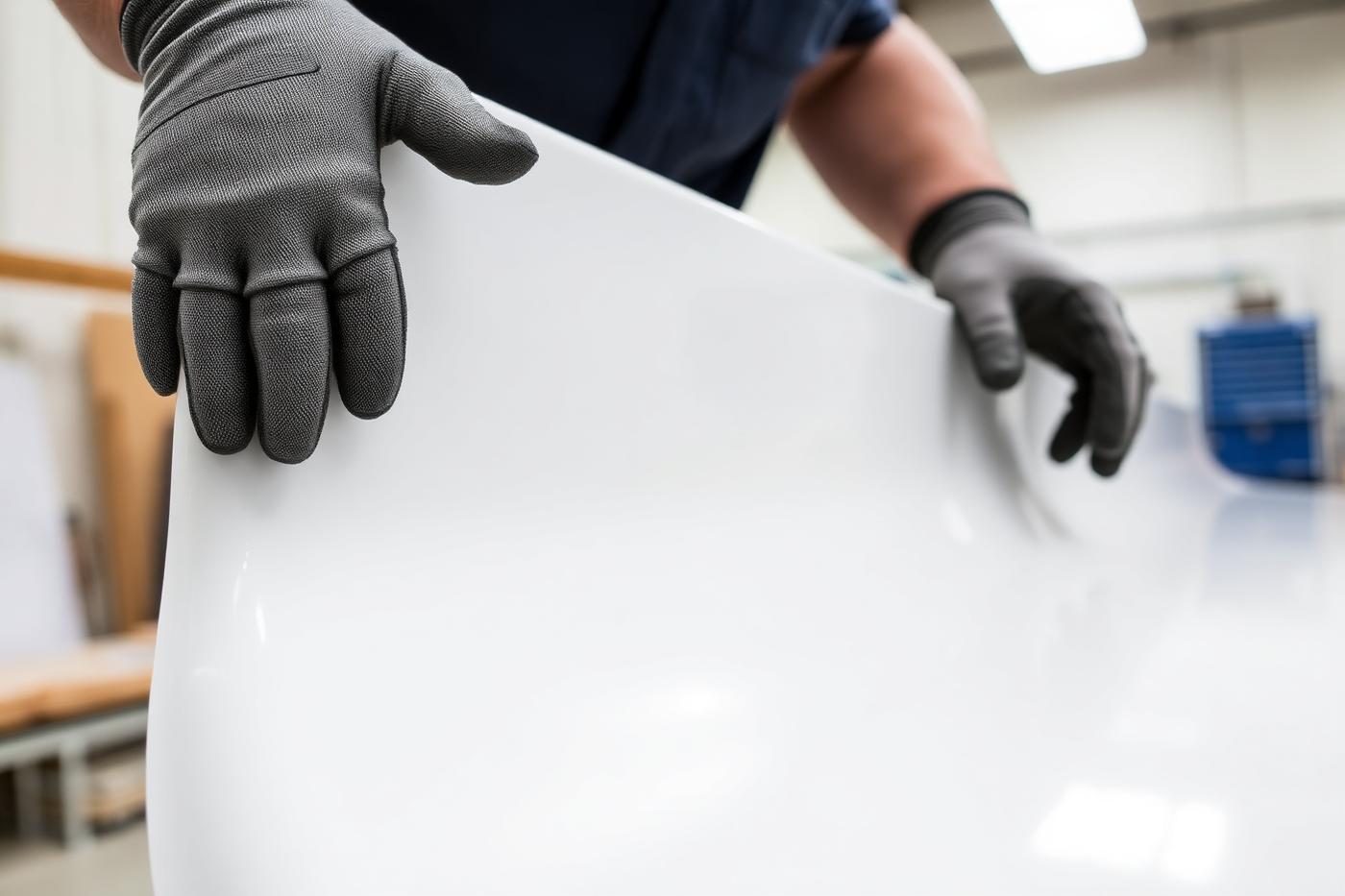
Wet sanding, compounding and polishing to a mirror gelcoat finish.
Open-water trials, crew familiarisation and a complete documentation pack.